
When it's too cold to walk, keep your dog busy indoors with short sessions of sniffing, licking, chewing, problem-solving and training. Scent games, lick mats, food puzzles and five-minute trick sessions tire the brain without risking frostbite. Keep outdoor potty breaks brief, protect the paws, and spread activities through the day.
My own dog, Milo, is a 12-year-old blind Maltese-Pekingese mix who loves treats of every kind. Because he's blind, he leans on his nose, which is why so much of this guide is built around scent.
Key takeaways
- At −30°C, most dogs should only go out long enough for a bathroom break.
- Two to four 5–15 minute sessions beat one long one.
- Serve part of your dog's daily food in puzzles so winter doesn't add weight.
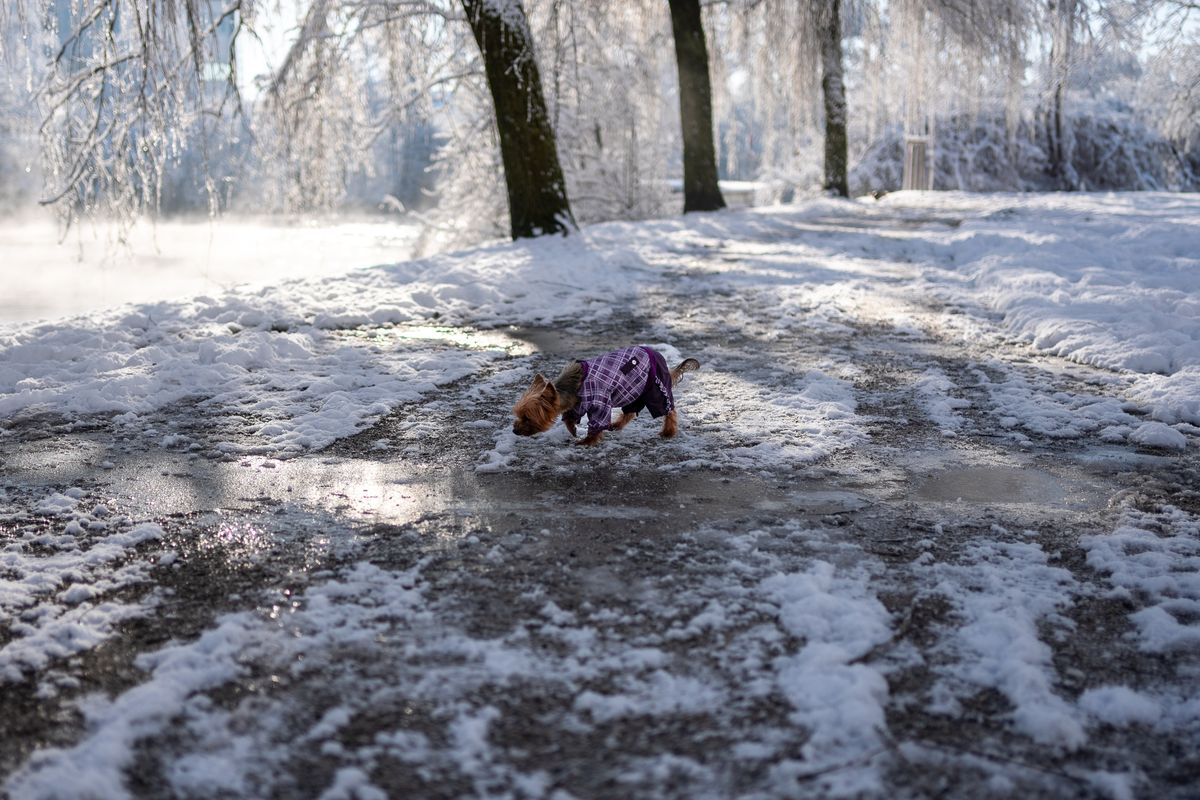
On a −30°C morning in Edmonton or Winnipeg, the usual hour-long walk isn't safe for most dogs. The AVMA advises shortening walks in very cold weather [1].
Cold tolerance varies with coat, body fat, age and health. If you're not sure where your dog's limit is, start with our guide to understanding your dog's tolerance to cold.
The good news: a lot of what tires a dog out isn't distance. It's using their nose, mouth and brain.
Why does indoor enrichment help on cold days?
Enrichment means letting a dog do natural things like sniffing, foraging, chewing and problem-solving. Research suggests it matters for wellbeing, not just for burning energy.
- Sniffing improves mood. Dogs that did two weeks of nosework became more "optimistic" in a judgment-bias test [2].
- Food toys and training calm behaviour. In a trial of 107 shelter dogs, a daily food toy plus short training sessions increased calm behaviour and reduced jumping [3].
- Feeding toys support natural feeding. Dogs fed from toys spent longer eating, were more active and had lower cortisol after a week [4].
These studies were small, so they don't prove any one toy will fix any one dog. But they match what most owners notice: a dog that's sniffed and chewed for 20 minutes settles better.
How long can my dog safely be outside at −30°C?
For most dogs, only long enough to go to the bathroom. Short-haired, short-legged, very young, very old and sick dogs feel the cold fastest [1].
Bring your dog in right away if they are shivering, whining, slowing down or looking for somewhere warm. If you suspect hypothermia or frostbite, call your vet.
How do I make potty breaks safe at −30°C?
- Clear a spot close to the door and put short-coated dogs in a dry coat.
- Use booties only if they fit, and check between the toes for ice balls.
- Wipe paws, legs and belly when you come in. De-icers and antifreeze are toxic if licked off.

Photo: Andreas Schnabl on Pexels
What are the best indoor activities when it's too cold to walk?
Pick two or three of these and rotate them so they stay interesting.
1. Scent games (find it)
- Have your dog wait, toss a treat a short distance away, say "find it" and release them.
- Once they get it, hide treats out of sight: behind a chair leg, under a towel, in a box.
- Spread hides across a room, then two rooms, or hide one treat under one of three cups.
Why it works: sniffing is mentally tiring and needs almost no equipment.

Photo: Kaboompics.com on Pexels
2. Snuffle work
- Sprinkle part of a meal into a snuffle mat or a rolled-up towel.
- Let your dog search, staying nearby the first few times.
- Pick it up when the food is gone so it doesn't become a chew toy.
Why it works: it turns a two-minute meal into a 10-minute foraging session.
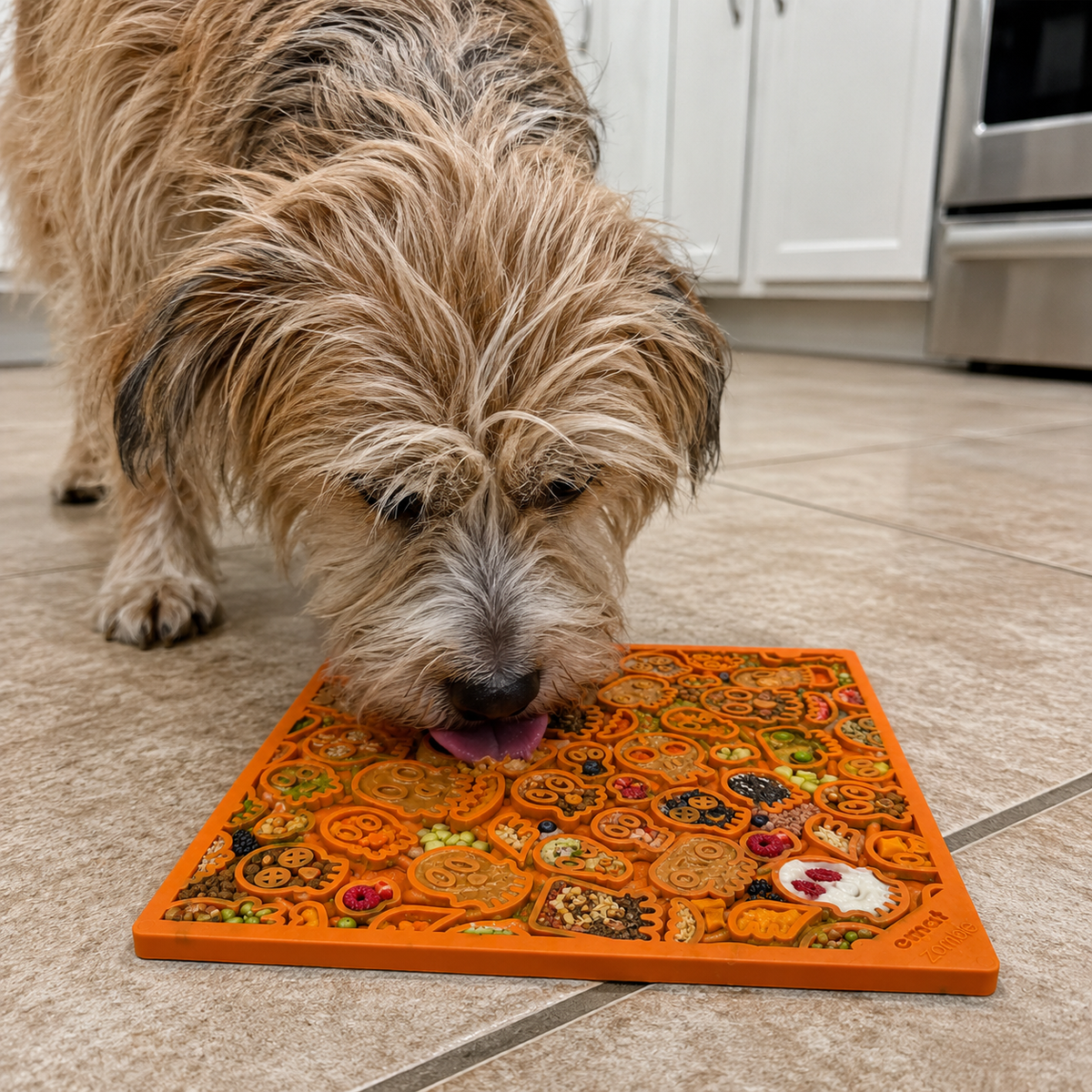
3. Lick mats
- Spread a thin layer of plain yogurt, unsweetened pumpkin purée or wet dog food on the mat.
- Freeze it for a few hours for a longer session.
- Supervise, take it away if your dog chews it, and wash it after use.
Why it works: licking is calm and repetitive, so it helps a dog settle.

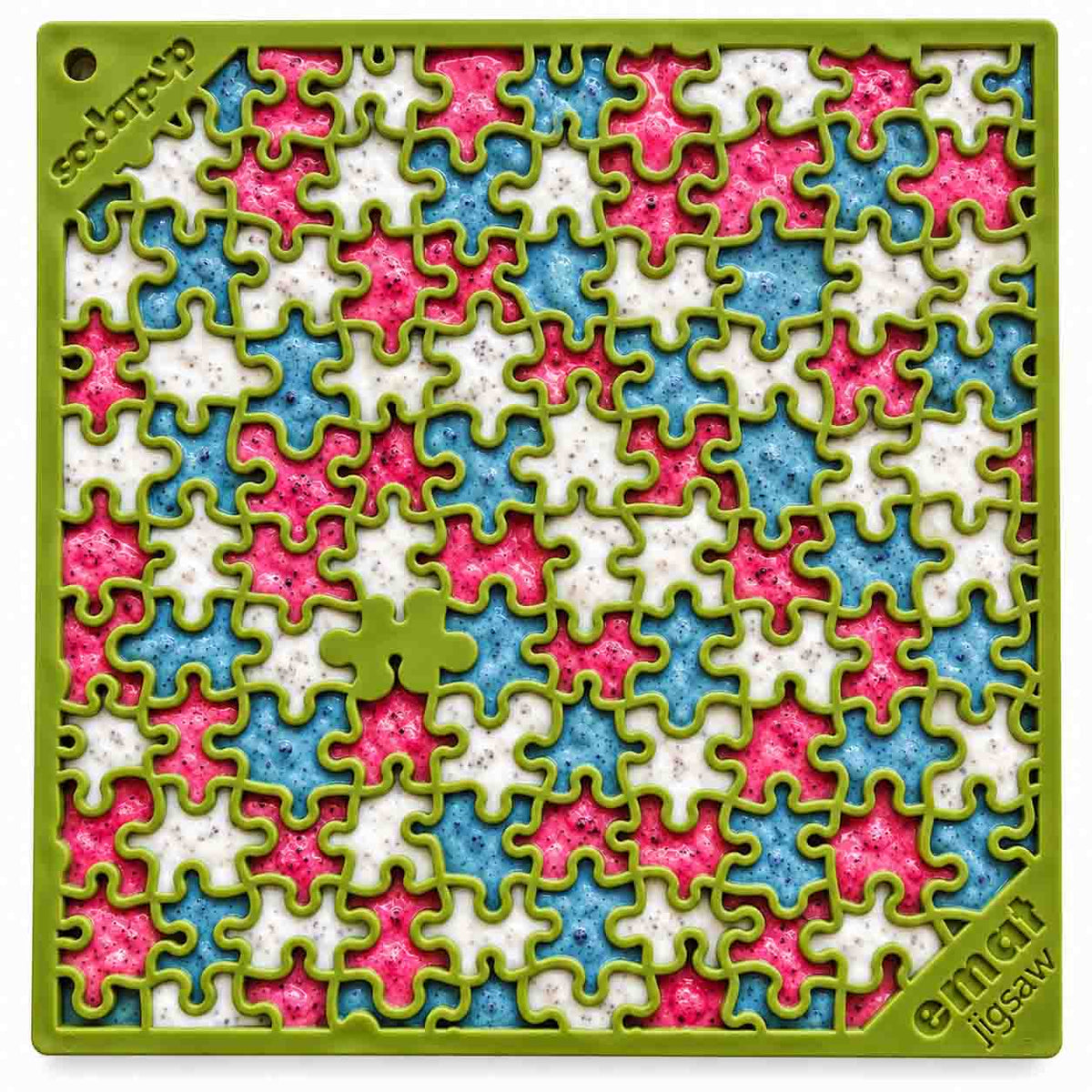
Our Flower Power lick mat and Jigsaw lick mat work well for this. For spread ideas, see our 30 lick mat recipes. Avoid xylitol, grapes, onions and chocolate.
4. Food puzzles and treat-dispensing toys
- Start easy: fill the toy loosely so food falls out quickly.
- Then pack it tighter, or stuff a rubber toy and freeze it overnight.
- Count the food as part of the daily ration [1].
Why it works: your dog has to roll, push or chew for every bite.

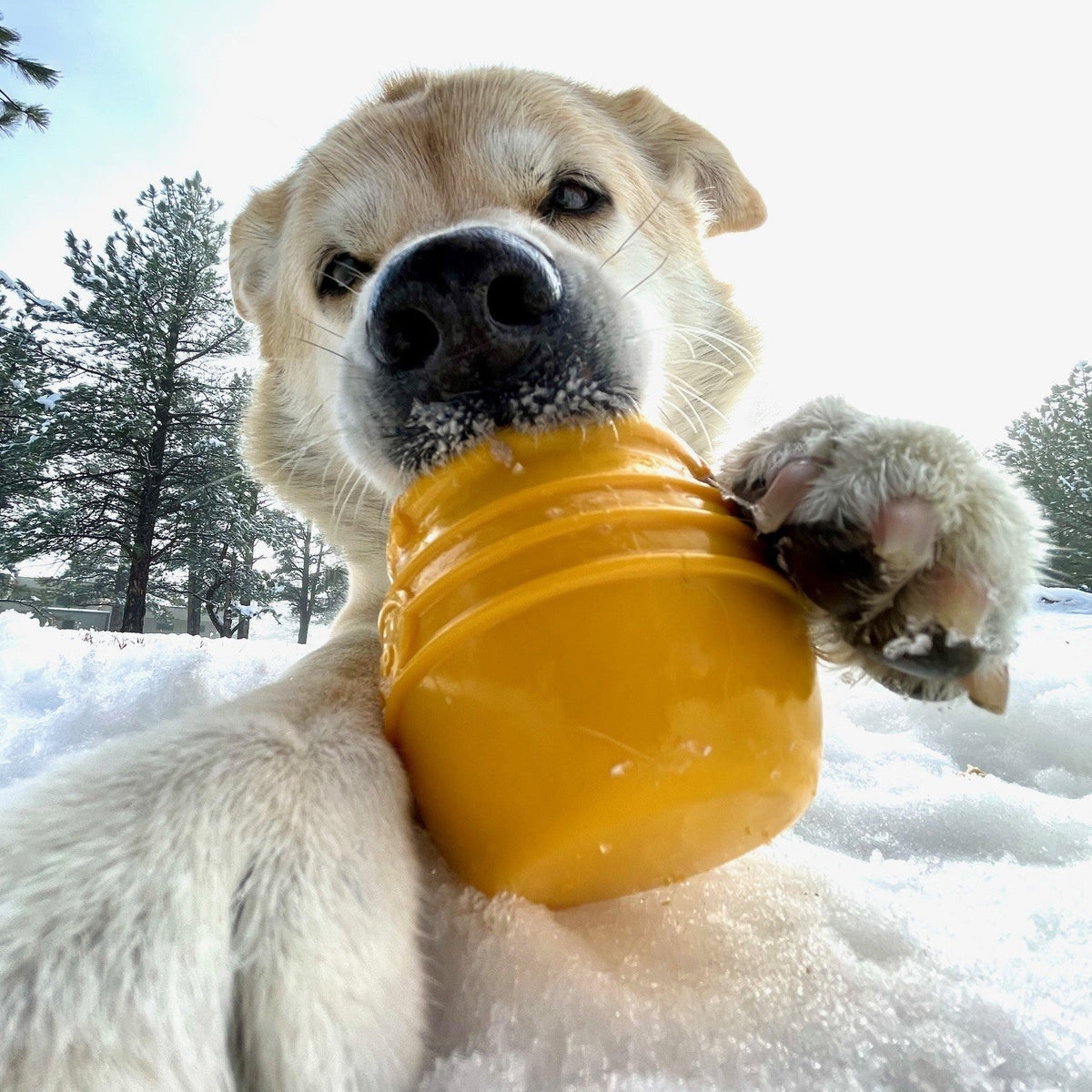
The Honey Bear rubber treat dispenser is a durable option.
5. Short training games
- Name game: say your dog's name once and reward the moment they turn to you.
- Hand target: hold out two fingers and reward a nose touch.
- Go to mat or new tricks: spin, paw or bow all work in a small space.
Why it works: five minutes of training tires the brain and improves manners. Stop while your dog is still keen, and break treats into small pieces.

Photo: Samson Katt on Pexels
6. Chew time
- Choose a chew too big to swallow whole.
- Supervise, and take away the last small piece.
- Offer chews after activity, not as the only activity of the day.
Why it works: chewing is settling and can buy 20 minutes or more of quiet.

Photo: Sean Brannon on Pexels
Our 6" bully stick is one option. Check with your vet if your dog has dental issues.
7. Gentle indoor play
- Lay a rug on hard floors for grip.
- Play short rounds of tug, hallway fetch with a soft toy, or hide-and-seek.
- Finish with something calm, like a lick mat.
Why it works: it burns a bit of physical energy safely. Keep it brief for older or arthritic dogs.
Quick-reference table
| Activity | Time | What you need | Good for seniors or blind dogs? |
|---|---|---|---|
| Scent games | 5–10 min | Treats, cups or boxes | Yes, start with easy hides |
| Snuffle work | 5–15 min | Snuffle mat or towel, kibble | Yes |
| Lick mat | 10–20 min | Lick mat, dog-safe spread | Yes, very low effort |
| Food puzzle | 10–20 min | Treat-dispensing toy, kibble | Yes, keep it easy |
| Training games | About 5 min | Small soft treats | Yes, use voice and touch cues |
| Chew time | 15–30 min | Size-appropriate chew | Depends on teeth; ask your vet |
| Gentle play | 5–10 min | Soft toy, rug | Sometimes; keep it short |
How do I adapt these games for a senior or blind dog?
Dogs lean on their noses and ears, so they often adapt well to vision loss in a familiar home [5]. That makes scent work a natural fit.

Photo: Harry Tucker on Pexels
- Keep the layout the same. Leave furniture, food, water and bed in fixed spots [5].
- Guide the first few hides. Hide smelly treats in a small area and guide your dog to the first few with lots of encouragement [6].
- Try a muffin-tin puzzle. Hide treats under tennis balls in a muffin tin [6].
- Add scent or sound to toys. Rub dog-safe food on a rubber toy, or pick toys that squeak or crackle.
- Keep sessions short in a clear space with no stairs, and stop at the first sign of tiredness.
Milo is blind and will happily work for any treat, so scent games and lick mats are his obvious fit. Plenty of food-motivated senior dogs are the same.
How do I plan a full cold-day routine?
- Morning: quick potty break, then breakfast in a food puzzle or snuffle mat.
- Midday: potty break, five minutes of training, then a scent game.
- Afternoon: chew time or a frozen lick mat while you work.
- Evening: potty break, gentle play, then a calm lick mat before bed.
Young, high-energy dogs may need more sessions; seniors may prefer fewer, gentler ones.
If your dog is still restless, or starts chewing furniture, barking, pacing or toileting indoors, see your vet first to rule out pain or illness. After that, a qualified trainer or veterinary behaviourist can help.
Sources
- American Veterinary Medical Association. Cold weather animal safety.
- Duranton, C. & Horowitz, A. (2019). Let me sniff! Nosework induces positive judgment bias in pet dogs. Applied Animal Behaviour Science, 211, 61–66.
- Effects of environmental enrichment on the behavior of shelter dogs (2014). Journal of the American Veterinary Medical Association, 244(6), 687.
- Effect of feeding toy and the presence of a dog owner during the feeding time on dog welfare. PubMed Central.
- American Kennel Club. Vision loss in dogs: signs, symptoms, and management.
- Toronto Humane Society. Training and enriching blind and deaf dogs (PDF).
This article is general information, not veterinary advice. If you're concerned about your dog's health or behaviour, contact your veterinarian.
Shop this post
Enrichment Dog Lick Mats




Leave a comment
All comments are moderated before being published.
This site is protected by hCaptcha and the hCaptcha Privacy Policy and Terms of Service apply.